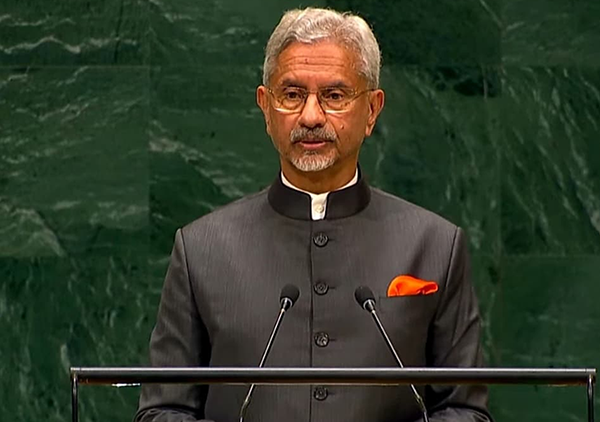
External Affairs Minister S Jaishankar has warned that ongoing global conflicts could trigger a major food crisis in the coming months. Speaking at an event organised by the Asia Society in New York, he highlighted the growing disruptions to grain shipments, fertiliser production, energy supplies and global finance. Jaishankar warns of major food crisis as developing nations face mounting economic pressure.
Jaishankar Highlights Growing Fertiliser and Grain Shortages
During his address, Jaishankar pointed to the far-reaching consequences of the Ukraine conflict and the Iran-Gulf crisis. He explained how disruptions in these regions were affecting countries far beyond the immediate conflict zones.
Highlighting the growing agricultural challenges, the minister said, “We are already looking at major significant fertiliser shortages.” He also warned that disruptions to important grain-exporting routes, particularly through the Black Sea, could make shipments increasingly difficult.
He cautioned that these developments could lead to a significant food crisis in the coming months.
Energy Supplies and Financial Pressures Add to Concerns
Jaishankar also highlighted the risks posed by disruptions to global energy supplies. He noted that oil markets remained tight and warned that politically driven decisions affecting supplies could push prices higher, adding to economic uncertainty.
The impact of these disruptions extends beyond rising food and fuel prices. According to the minister, global conflicts often redirect capital towards safer financial markets, reducing investment flows to developing economies.
Countries already dealing with rising food, fuel and fertiliser costs could face additional financial pressure, leaving them with limited resources to manage further economic shocks.
El Niño Adds to Concerns Over Food Security
The possibility of El Niño adds another dimension to concerns about global food security. The climate phenomenon can alter rainfall patterns and increase the risk of droughts and extreme weather in several regions, potentially affecting agricultural production.
Combined with supply chain disruptions and rising input costs, adverse weather conditions could create additional challenges for countries that depend heavily on agriculture. However, the scale of any impact would depend on regional weather patterns and agricultural conditions.
Jaishankar Calls for Greater Global Responsibility
Emphasising the importance of international cooperation, Jaishankar urged world leaders to consider the wider consequences of their decisions. He said, “Countries should not be so self-centred that you’re in your own world and take your decision.”
He stressed that domestic policy decisions can have significant consequences for other countries, particularly developing nations with limited resources to manage economic disruptions.
Jaishankar also cautioned against allowing vulnerable economies to slide into severe distress, noting that economic instability can have wider implications for global security.
India’s Position on Developing Nations
Referring to India’s post-colonial experience, Jaishankar highlighted the country’s connection with the challenges faced by developing nations. He also noted that industrialised countries have a practical interest in preventing economic instability across the developing world.
He pointed to the economic and political pressures experienced by countries in India’s neighbourhood following the outbreak of the Ukraine war.
The minister made these remarks while discussing the challenges countries face in maintaining diplomatic independence amid growing competition among major powers. He observed that a country’s ability to maintain strategic autonomy depends on its geopolitical circumstances and the issue involved.
Jaishankar also expressed concern over the slow progress towards the United Nations Sustainable Development Goals, which were adopted in 2015 with a 2030 deadline. He described food, fuel, fertilisers and finance as interconnected challenges that are adding to the vulnerabilities of countries already facing conflict and supply chain disruptions.
FAQs
1. What did S Jaishankar warn about?
S Jaishankar warned that global conflicts and disruptions to grain shipments and fertiliser supplies could trigger a major food crisis in the coming months.
2. Why does Jaishankar warn of a major food crisis?
Jaishankar cited fertiliser shortages, disruptions to grain exports, energy supply pressures and financial instability as factors that could contribute to a food crisis.
3. How could El Niño affect global food security?
El Niño can alter rainfall patterns and increase the risk of droughts in some regions, potentially affecting crop production and adding pressure to food supplies.
4. Where did Jaishankar make these remarks?
The External Affairs Minister made the remarks at an event organised by the Asia Society in New York.