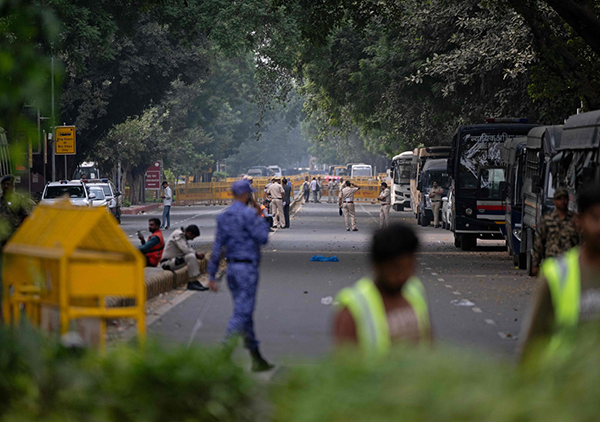
Delhi Police has de-notified Jantar Mantar as a designated protest venue in Lutyens’ Delhi, naming three alternative locations for demonstrations across the city. The decision brings renewed attention to the balance between regulating public gatherings and protecting the right to peaceful protest.
The new designated venues are Ramlila Ground, Burari Ground and CBD Ground in Shahdara. The move comes two days after the Supreme Court called on authorities to consider better-equipped alternatives for demonstrations.
However, the decision has revived questions about whether relocating protests away from the capital’s political centre could limit the visibility of public dissent.
How Jantar Mantar Became A Protest Hub
Jantar Mantar was originally built as an astronomical observatory, but the adjoining road gradually became an important location for public demonstrations.
After protests at the Boat Club lawns near India Gate were restricted following a major farmers’ agitation in the 1980s, Jantar Mantar emerged around 1993 as a principal venue for demonstrations permitted in the national capital.
Its central location made it particularly significant for protesters seeking to bring their concerns to the attention of political leaders and government authorities.
Situated near Parliament and government offices, the venue allowed demonstrators to make their demands visible while enabling authorities to regulate gatherings within a relatively compact area.
The Supreme Court’s 2018 judgment recorded arguments highlighting the importance of the location and concerns that shifting protesters farther away could reduce the impact of their message.
Protests By Farmers, Students And Civil Society Groups
Over the years, Jantar Mantar has hosted demonstrations by farmers, trade unions, political parties, students, civil society organisations and individuals seeking attention for personal causes.
Some protests lasted only a few hours, while others continued for extended periods, with participants setting up tents and temporary structures.
The site became associated with several public campaigns because it offered protesters a recognised location to assemble and draw attention to their demands.
However, prolonged demonstrations and the use of temporary structures also raised questions about public order, traffic management and the regulation of public spaces.
Supreme Court’s 2018 Judgment
The debate over Jantar Mantar’s role as a protest venue has a significant legal dimension.
In 2018, the Supreme Court considered the competing interests involved in regulating demonstrations and protecting the right to peaceful assembly. The case highlighted the need to balance public order with citizens’ ability to express their grievances.
The central question was how authorities could impose reasonable restrictions on protests without effectively preventing people from exercising their constitutional rights.
The latest decision to de-notify Jantar Mantar has brought that question back into focus, particularly regarding whether the alternative venues will provide protesters with comparable visibility and accessibility.
Three New Venues Named For Demonstrations
Delhi Police has designated Ramlila Ground, Burari Ground and CBD Ground in Shahdara as alternative locations for demonstrations.
The venues are spread across different parts of the city, potentially giving authorities more options to manage public gatherings.
However, their distance from Parliament and central government offices may affect how easily protesters can attract the attention of political representatives and the public.
The implications of the change will depend on how the new arrangements operate in practice, including access to the venues and the conditions imposed on demonstrations.
The Right To Protest Remains Central To The Debate
The removal of Jantar Mantar as a designated protest site has reopened a wider discussion about the relationship between public order and democratic dissent.
Authorities have to manage demonstrations while addressing concerns such as congestion, safety and disruption. At the same time, the ability to assemble peacefully and communicate grievances is an important constitutional freedom.
The key question is whether the alternative venues will offer practical spaces for peaceful demonstrations without diminishing their ability to reach the intended audience.
As Delhi shifts its designated protest locations, the debate over how the capital accommodates public dissent is likely to continue.
FAQs
Q: Why has Delhi Police de-notified Jantar Mantar as a protest site?
A: Delhi Police has removed Jantar Mantar’s designation as a protest venue and named three alternative locations for demonstrations.
Q: Which locations have been designated as alternative protest sites?
A: The new venues are Ramlila Ground, Burari Ground and CBD Ground in Shahdara.
Q: Why is Jantar Mantar important for protests?
A: Jantar Mantar became a major protest hub around 1993 because of its central location and proximity to Parliament and government offices.
Q: What did the Supreme Court consider in 2018?
A: The Supreme Court examined the balance between regulating public demonstrations and protecting citizens’ right to peaceful assembly.
Q: Will the right to protest be affected by the decision?
A: The practical impact remains to be seen. The debate centres on whether the alternative venues will allow peaceful protests while preserving protesters’ ability to make their demands heard.