
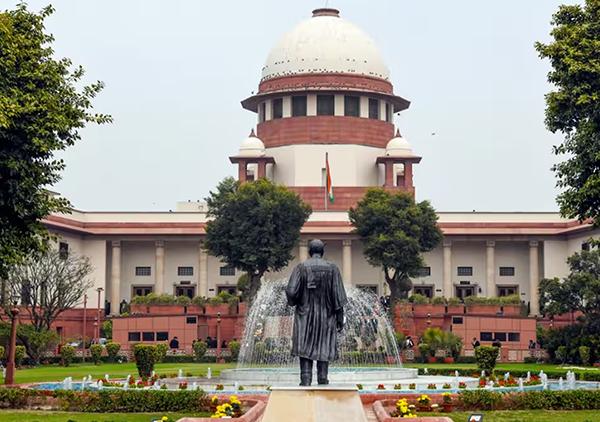
The Supreme Court on Thursday ruled that a person converting from Hinduism to another religion cannot automatically claim backward class reservation benefits based on their pre-conversion caste status. The Supreme Court reservation ruling came while dismissing the Tamil Nadu government’s challenge to a Madras High Court order on the issue.
A bench of Justices Prashant Kumar Mishra and Shree Chandrashekhar held that social backwardness associated with a person’s position in the Hindu social order cannot automatically be transferred to a non-Hindu social order following religious conversion.
The top court upheld the High Court’s decision that conversion alone does not entitle a person to claim reservation under the Backward Class (Muslim) category solely on the basis of their earlier caste status.
Supreme Court Reservation Ruling On Conversion
The Supreme Court observed that conversion to a non-Hindu social order does not, by itself, confer membership of a particular backward caste community.
It clarified that a person’s caste or community status before conversion cannot automatically be transferred to a notified backward class category after changing religion.
The bench also observed that reservation entitlements under Article 16(4) of the Constitution, where eligibility depends on membership of a particular social order, cannot be claimed merely on the basis of previous membership after conversion to Islam, Christianity or another non-Hindu religion.
The ruling concerns the automatic continuation of caste-based reservation eligibility after religious conversion. A person’s previous caste status alone cannot establish membership in a notified backward class category in the new social order.
Why Did The Supreme Court Reject Tamil Nadu Government’s Plea?
The Tamil Nadu government had challenged a Madras High Court order that struck down a 2024 government order concerning reservation benefits for people who converted to Islam.
The state government’s order allowed individuals from Backward Classes, Most Backward Classes, Denotified Communities and Scheduled Castes who converted to Islam to be treated as Backward Class (Muslim) and obtain community certificates under one of seven notified communities for reservation purposes.
The Madras High Court had declared the order unconstitutional, holding that conversion alone could not establish membership in a specific notified backward class community. The Tamil Nadu government subsequently approached the Supreme Court, arguing that socially and educationally backward individuals should not lose reservation benefits merely because they changed their religion.
However, the Supreme Court dismissed the state’s plea and upheld the High Court’s decision.
What Did The Court Say About Caste Status After Conversion?
The bench emphasised that reservation eligibility linked to membership of a particular social order cannot be established merely by referring to a person’s caste or community status before conversion.
According to the court, previous membership of a caste does not automatically establish eligibility for a notified backward class category in the new social order.
The ruling clarifies that a person’s pre-conversion social status cannot, by itself, serve as the legal basis for claiming membership in a different notified backward class community after conversion.
Supreme Court On Reservation After Reconversion To Hinduism
The Supreme Court also addressed cases in which a person converts from Hinduism to another religion and later returns to Hinduism.
The bench said reservation eligibility after reconversion cannot be decided solely by referring to the person’s original caste status. Instead, the competent authority must independently assess whether the original caste or social identity has genuinely revived and whether the person meets the applicable constitutional and legal requirements.
This means reconversion does not automatically restore reservation eligibility. The individual’s circumstances and the relevant legal requirements must be examined.
What The Supreme Court Reservation Ruling Means
The Supreme Court’s decision reinforces the principle that caste-based reservation eligibility cannot automatically be carried forward from a person’s pre-conversion status when the entitlement depends on membership of a particular social order.
The ruling also upholds the Madras High Court’s decision to strike down Tamil Nadu’s 2024 government order, which sought to extend Backward Class (Muslim) classification to people converting from specified social categories.
The judgment highlights the distinction between a person’s previous caste identity and their eligibility for membership in a notified backward class community after religious conversion.
FAQs
1. What did the Supreme Court rule on reservation after conversion?
The Supreme Court ruled that a person converting from Hinduism to another religion cannot automatically claim backward class reservation benefits based on their pre-conversion caste status.
2. Why did the Supreme Court reject Tamil Nadu government’s plea?
The court dismissed the state’s challenge to a Madras High Court order that struck down a 2024 government order allowing certain people who converted to Islam to claim reservation under the Backward Class (Muslim) category.
3. What was the Tamil Nadu government’s argument?
The state argued that socially and educationally backward individuals should not lose reservation benefits simply because they converted to another religion.
4. What did the court say about reconversion to Hinduism?
The court said reservation eligibility after reconversion requires an independent assessment of whether the original caste or social identity has genuinely revived and whether the applicable legal requirements are satisfied.
5. Does the ruling mean reservation eligibility automatically returns after reconversion?
No. The court clarified that eligibility after reconversion cannot be determined solely by a person’s previous caste status. The relevant facts and legal requirements must be independently assessed.